The Case Against Constant Transformation
The most dangerous word in corporate life right now is transformation. Not because change is wrong, but because transformation has become the default response to every performance problem, including the ones caused by too much change in the first place.
I have spent a career across manufacturing, humanitarian projects, and the corporate world watching organisations confuse motion with progress. The companies that actually compound performance over time — Toyota, Microsoft and Amazon — share almost nothing in their business models. But they share one thing almost exactly: they protect their people and their processes from the urge to reinvent.

The Evidence for Stability
The case for consistency in leadership and process is not anecdotal. It is structural, and it plays out at the largest scale possible.
Toyota: Seventy Years of the Same Idea
Toyota’s dominance in global manufacturing is not the result of any single brilliant decision. It is the cumulative effect of a philosophy that has been patiently embedded over seven decades. The Toyota Production System, rooted in the principles of Jidoka (automation with human judgement) and Just-in-Time production, was not invented and then handed to a fresh leadership team each cycle to reinterpret. The TPS principles are organised around four dimensions — philosophy, processes, people, and learning — with decisions grounded in long-term sustainability even at the expense of short-term gains.

What makes Toyota genuinely instructive for project managers is not the manufacturing mechanics. It is the cultural architecture underneath. Toyota protects its organisational knowledge base by developing stable personnel, slow promotion, and very careful succession systems — treating continuous improvement as a never-ending total organisation journey rather than a periodic initiative. That sentence deserves reading twice. Slow promotion. Careful succession. These are not words that appear in the modern corporate lexicon of agility and disruption. But they are the words that describe a company which has, by most measures, been profitable for the better part of its existence.
The implication for project delivery is direct. Toyota’s principle of Genchi Genbutsu — going to the source to make decisions — only works when the people making those decisions have been around long enough to know where the source is. You cannot build that into a leadership tenure of eighteen months.
Microsoft: The Power of a Consistent Cultural Bet
In 2014, when Satya Nadella became Microsoft’s third CEO, the company was in a deeply uncomfortable position. It had missed mobile. It was losing the cloud race. Internally, it was organised around competitive silos that produced winners and losers rather than outcomes. By putting culture first, realigning organisational priorities, and committing to long-term shifts like cloud and AI, Nadella transformed Microsoft from a legacy software company into a modern innovation platform.
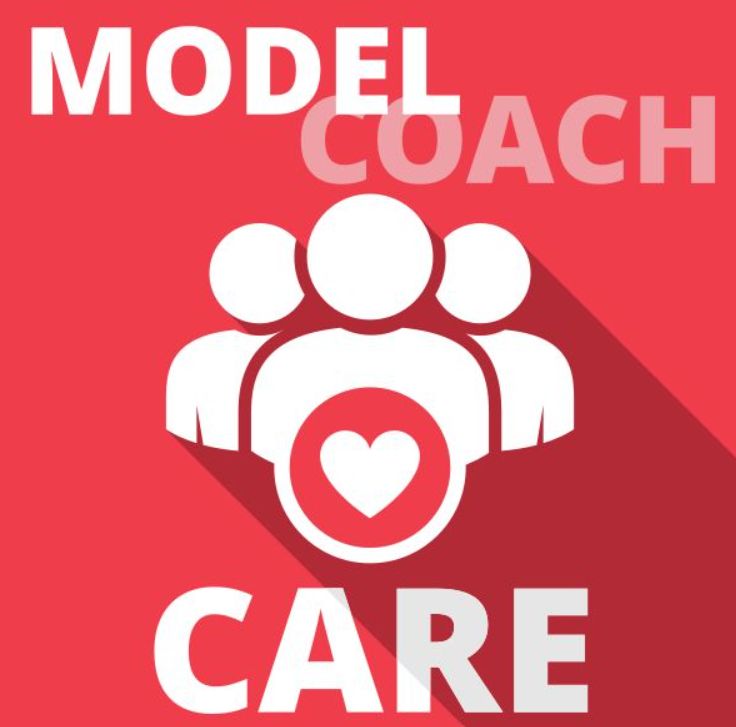
The critical point here is not the transformation itself — it is what Nadella then refused to change. Having set the direction, he held it. Microsoft distilled its leadership expectations into a practical framework called ‘Model, Coach, Care‘, developed over two years using employee feedback, focus groups and surveys. That framework was not discarded after twelve months and replaced with a new one. It was embedded, trained into 16,000 leaders across the organisation, and treated as foundational rather than provisional.
As Nadella moved forward after a decade of leadership, he remained loyal to the concept of staying fluid and constantly growing, maintaining that Microsoft must stay humble, stay hungry, and exhibit a growth mindset. A decade. In an industry where CEO tenures are shrinking year on year, Nadella’s consistency of philosophy — not his individual brilliance — is what allowed Microsoft’s market capitalisation to grow from roughly $300 billion to over $2.5 trillion.
The lesson for senior project managers is uncomfortable but important. If your sponsor changes every eighteen months, your delivery framework will never be mature enough to produce the results it was designed for. You will always be in the setup phase.
Amazon’s Leadership Principles: Process as Cultural DNA
Amazon’s approach to embedding consistency works differently to Toyota or Microsoft but arrives at the same place. As Amazon grew into one of the world’s largest tech and e-commerce companies, it embedded 16 Leadership Principles that define how every employee thinks, acts, and makes decisions — a unified culture designed to guide decision-making and sustain its long-term strategy at scale.
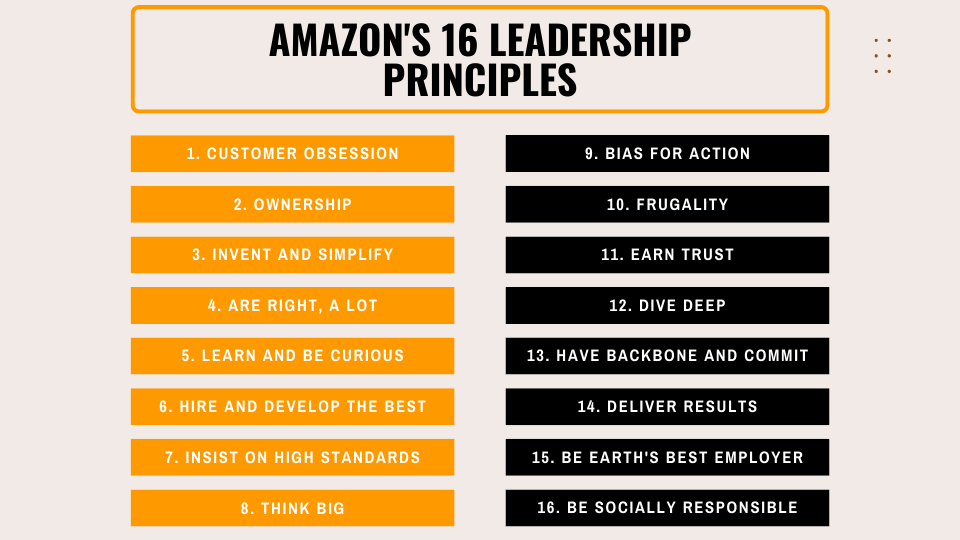
What Amazon understood, and what many organisations still do not, is that principles only function as process if they are non-negotiable. They cannot be the thing a new VP decides to revisit in their first hundred days. They are the grammar of the organisation — the shared language through which complex, distributed teams make decisions without waiting for permission. The moment you treat that grammar as up for debate, you stop being a high-functioning organisation and start being an endless debate society.
What Happens When You Keep Changing Everything
The contrast with organisations defined by leadership churn and process reinvention is stark, and the most instructive example in recent business history is Boeing.
Boeing: When Engineering Culture Became a Rounding Error
Boeing was once regarded as the gold standard of engineering-led organisations. Its culture was built on technical excellence, institutional knowledge, and a safety-first approach that had made it dominant for decades. Then came the McDonnell Douglas merger and a consequential shift in priorities at the top.
Boeing’s senior leadership contributed to the failure of the 737 MAX by instituting cultural change that emphasised financial performance at the expense of engineering quality. After the company’s acquisition of McDonnell Douglas, the senior-most leaders reoriented Boeing around stricter financial discipline.
The consequences of that reorientation are well documented. Two crashes. 346 lives lost. A global grounding of an entire aircraft type. Boeing’s decision to move its headquarters from Seattle to Chicago in 2001 created a physical and cultural distance between the company’s leadership and its engineers, and decisions were made without a full understanding of the technical challenges involved.
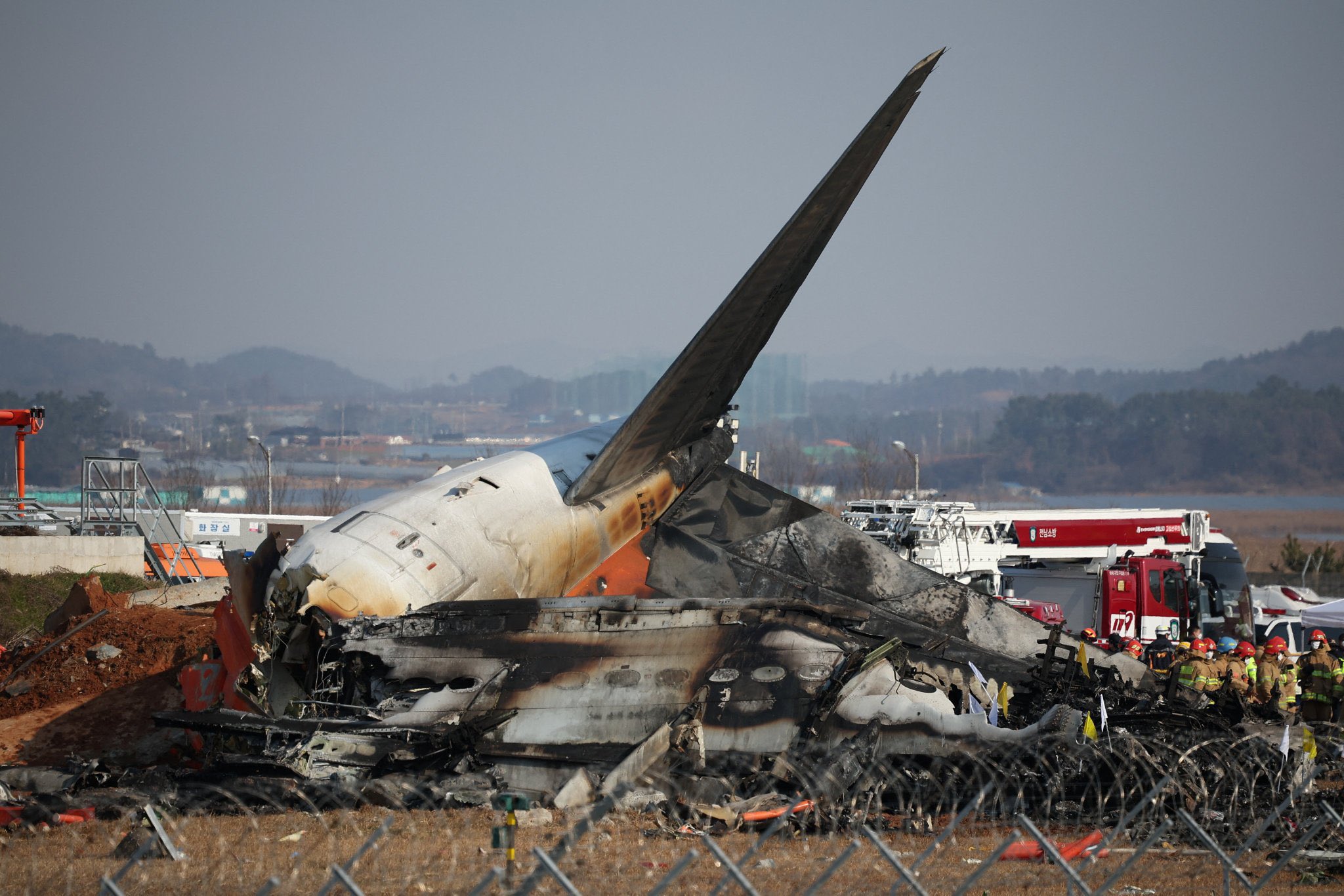
Whistleblowers reported problems with operating processes that were ignored by management and weren’t always reported to the board of directors. This is what the end state of leadership disconnection looks like. Not a single catastrophic decision, but the accumulated effect of an organisation that stopped listening to the people who understood the work, and then kept changing the people at the top often enough that nobody remained who was accountable to the original institutional values.
Aerospace experts have suggested that the turnover of experienced workers at Boeing likely contributed to the company’s quality issues — a reminder that leadership continuity and workforce continuity are not separate concerns. They are the same concern.
The Record Turnover Problem
Boeing is not an isolated case. According to outplacement firm Challenger, Gray & Christmas, 622 CEOs announced in the first quarter of 2024 alone that they would soon quit — the highest quarterly total on record, representing a 50% increase compared to the same quarter the previous year. Meanwhile, the median tenure among CEOs of S&P 500 companies has been shrinking — it was six years in 2013 and 4.8 years in 2022.
The pattern is always the same. A new leader arrives and commissions a review. The review recommends restructuring which produces redundancies and reorganisation. A new operating model is announced. By the time the new model is halfway implemented, the leader who commissioned it has either left or been replaced. The process begins again.
For people living inside these organisations — particularly project managers trying to maintain governance coherence — this is not energising disruption. It is demoralising noise.
What This Means for Project Management
The relevance of all this to project delivery is not abstract. It is felt in every programme kick-off where the sponsor has been in post for eight months and doesn’t fully understand the business case they are now nominally owning. It is felt in every discovery phase where the team discovers that the process the new CIO wants to use contradicts the framework the previous one embedded two years ago, and nobody is willing to make a decision about which takes precedence.
Senior project managers operating in high-churn environments should consider the following.
First, document the why, not just the what. When organisational memory is fragmenting because people keep leaving, the project team becomes the keeper of institutional knowledge. A well-maintained decision log, rationale register, and lessons-learned archive is not bureaucracy. It is continuity infrastructure.
Second, be explicit about the cost of process disruption. When a new stakeholder arrives wanting to change the delivery approach mid-programme, the project manager’s job is to make the cost of that change visible. Not in an obstructive way, but in a rigorous one. Process maturity takes time. A methodology that has been in use for twelve months has resolved edge cases, refined templates, and trained teams. Replacing it does not give you a better process. It gives you the same process at month zero again.
Third, invest in human continuity. The most resilient programmes are those where the core team has been together long enough to develop a shared language. Rotating people for development purposes or because of organisational changes has a real cost that rarely appears in resource plans. The knowledge that sits between people — the informal understanding of how decisions actually get made, who the real subject matter experts are, which risks are likely to materialise — cannot be documented into a handover pack. It dissolves when the person leaves.
Fourth, push for leadership coherence at programme board level. If your programme board is experiencing significant turnover, raise it as a risk. Not as a personal criticism of anyone, but as a delivery risk with a quantifiable impact on decision quality and timeline confidence. Boards that are refreshed too frequently cannot hold sponsors accountable to prior commitments, because nobody in the room was there when those commitments were made.
The Corporate Reality About Stability
The corporate culture of the last decade has, in many respects, disincentivised continuity. Leaders who stay too long are seen as stale. Processes that have been in place for several years are described as legacy. The bias is always toward the new, the disruptive, the transformed.
Toyota, Microsoft and Amazon offer a very different reading. Stability is not the absence of change. It is the platform from which meaningful change is possible. Toyota’s core belief is that industrial performance comes from stability, not speed — producing at the right pace, with rigour and calm, ensures reliability. That philosophy, maintained across generations of leadership, is precisely why Toyota can absorb disruption — earthquakes, supply chain failures, competitive pressure — and recover faster than organisations that have spent the equivalent energy reinventing themselves.
The businesses that sustain performance over time are not those that appoint the most transformational leaders. They are those that build cultures capable of outlasting any individual leader, because the values, processes, and people development systems are strong enough to carry the organisation forward regardless of who is at the top.
That is what project managers are, in the end, trying to create at programme level. A delivery environment stable enough to execute with confidence, robust enough to absorb the inevitable surprises, and staffed by people who have been around long enough to know the difference between a genuine risk and a recurring noise item on the register.
The organisations that get this right do not do it by accident. They do it by treating people and processes not as inputs to be optimised or periodically replaced, but as the foundational infrastructure on which everything else depends.